EICR Guide 2026: What It Is, Who Needs One, What's Tested
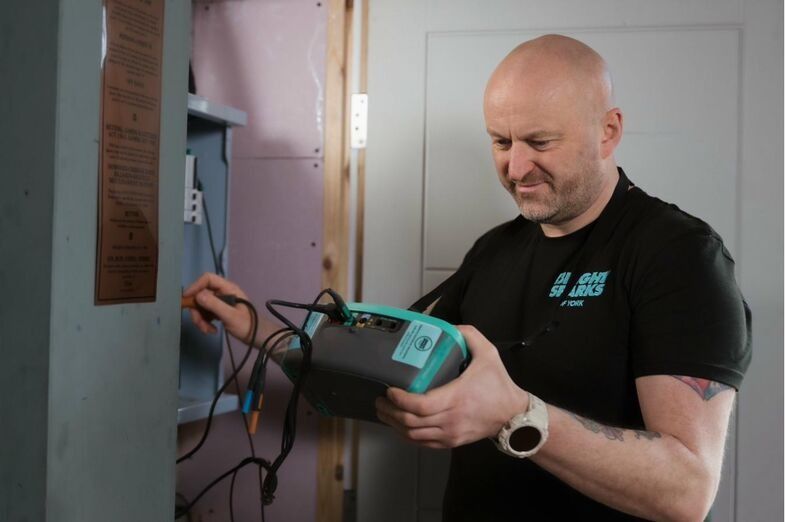
An EICR is the formal health-check for the electrics in a property. Whether you are a homeowner trying to understand why your solicitor is asking for one, a landlord renewing a five-year report, or someone who has just had one come back unsatisfactory
and does not know what to do next, this guide is written for you. Plain English, the codes explained properly, and what to expect on the day.
What is an EICR?
EICR stands for Electrical Installation Condition Report. Think of it as an MOT for your electrics. A qualified electrician visits the property, tests every circuit with calibrated meters (lighting, sockets, cooker, shower, immersion, the lot), and issues a formal written report against the current edition of the UK Wiring Regulations, BS 7671:2018+A4:2026 [1].
The report records the condition of the installation, notes any issues with standardised codes, and declares the overall outcome as satisfactory or unsatisfactory. It is not a hunt for extra work. If everything is in order, we say so.
Who needs an EICR?
Landlords: legal requirement
A rented home in England must have its electrical installation inspected and tested at least every five years, and where the report itself sets an earlier date, that earlier date applies [2]. The rules are the Electrical Safety Standards in the Private Rented Sector and Social Rented Sector (England) Regulations 2020, renamed on 1 November 2025 when the duty was extended to the social rented sector. Tenants must receive a copy of the report within 28 days. If you let a property in England, your council can fine you up to £40,000 for breaching the electrical safety rules, a maximum that rose from £30,000 on 1 November 2025 (or on 1 May 2026 for social housing tenancies granted before 1 December 2025). Where the failure continues, the council can impose more than one penalty.
Homeowners: strongly recommended
There is no legal obligation for an owner-occupier. The recommendation is an EICR every ten years, or sooner if your home is older, you have just moved in, or you have noticed symptoms like flickering lights, repeated trips, or a burning smell near sockets.
Buying or selling a property
Not mandatory, but increasingly expected at conveyancing. A satisfactory EICR is the single strongest electrical document in a sale pack. See the dedicated selling your house electrics guide for the TA6 walkthrough and the full pre-sale checklist.
Commercial premises and HMOs
Commercial and HMO properties are generally expected to hold an EICR at a maximum interval of five years, both as part of a duty of care and as a common insurer requirement.
The law for landlords, in detail
The 2020 regulations apply to every tenancy in England that grants one or more people the right to occupy the property as their main residence, other than a short list of exclusions (lodgers and some student halls). The key obligations [2]:
- An EICR must be carried out before a new tenancy begins, and thereafter at a maximum interval of five years.
- A copy of the report must be supplied to new tenants before occupation, and to existing tenants within 28 days of the inspection.
- The local authority can request a copy within seven days of asking.
- Remedial work or further investigation identified in the report must be completed within 28 days (or a shorter period if the report specifies one), and written confirmation of completion sent to the tenant and the local authority. The C1, C2 and FI codes themselves come from government guidance rather than from the regulations.
- If you let a property in England, your council can fine you up to £40,000 for breaching the electrical safety rules, a maximum that rose from £30,000 on 1 November 2025 (or on 1 May 2026 for social housing tenancies granted before 1 December 2025).
What I test on the day
- Visual inspection of the installationWe walk the property, check the consumer unit, main isolator, tails, main earth and bonding, and every accessible accessory. Many issues show up at this stage without test equipment.
- Ze and Zs loop impedanceWe measure earth fault loop impedance at the origin (Ze) and at the farthest point of each circuit (Zs) with a calibrated tester. The numbers confirm whether the circuit will trip fast enough under a fault.
- Insulation resistanceEvery circuit is isolated and tested live-to-earth and live-to-neutral at 500 V DC. Readings below 2 megohms warrant attention; below 1 megohm is a C2.
- Polarity and continuityEvery accessory is checked for correct polarity, and every protective conductor is confirmed continuous end to end.
- RCD and RCBO operationEvery residual current device is tested at 30 mA and 150 mA, and the monthly test button is operated. Drifted trip times, or a button that does not fire the mechanism, fails the device.
- Report and observation codesAll results are recorded on the BS 7671 schedule of test results, observations coded C1, C2, C3 or FI, and the overall outcome marked satisfactory or unsatisfactory. You get the report by email and a printed copy.
C1, C2, C3 and FI observation codes
| Code | Meaning | Effect on the report | What has to happen |
|---|---|---|---|
| C1 | Danger present, risk of injury | Unsatisfactory | Make safe immediately, often on the day. Notify the tenant or occupant. |
| C2 | Potentially dangerous, remedial required | Unsatisfactory | Plan and complete remedial work before the installation is relied upon. |
| C3 | Improvement recommended, not urgent | Satisfactory | Optional. Often deferred or scheduled with the next maintenance. |
| FI | Further investigation required | Unsatisfactory until cleared | Return visit to complete the test or open up a concealed element. |
One of the most common misunderstandings: a report can carry a long list of C3s and still be satisfactory. One C2 or FI, and it is unsatisfactory. That single word is what the landlord, buyer or insurer reads first.
Common findings on York EICRs
Six issues account for most of the C1 and C2 codes I see on York pre-sale and rental EICRs:
| Finding | Typical code | Typical remedial |
|---|---|---|
| No RCD protection on socket or lighting circuits | C2 | RCBO retrofit on the circuit, or full consumer unit upgrade |
| Plastic consumer unit in a flat or HMO | C2 | Replace with a metal enclosure to current BS 7671 |
| Main earth or main bonding undersized or missing | C2 | Upgrade to 16 mm main earth and 10 mm bonding |
| Rubber-insulated pre-1960s cable still in use | C2 | Rewire the affected circuits or the whole property |
| Loose or damaged accessory on an outdoor or bathroom circuit | C2 | Replace the accessory and retest the circuit |
| Consumer unit schedule missing or illegible | C3 | Relabel and update the schedule |
What if your property fails an EICR?
Don't panic. A lot of properties come back unsatisfactory, it does not mean the house is about to burn down, it means an issue has been identified and now you know about it. We explain every code in plain English, estimate the remedial work in writing, and you decide what to do.
For rental property, the 28-day clock starts from the date of the report. I can usually fit the remedial work into that window. Once it is done, I re-test the affected circuits and re-issue the certificate.
C3 codes are advisory. There is no obligation to act, but I'll always note what I would recommend and why.
How often do you need an EICR?
| Property type | Maximum interval | Legal or advisory? |
|---|---|---|
| Privately rented domestic (England) | 5 years | Legal requirement |
| Owner-occupied domestic | 10 years | Advisory |
| Owner-occupied domestic, pre-sale | No rule, less than 5 years preferred | Advisory, increasingly expected |
| Houses in Multiple Occupation (HMOs) | 5 years | Legal requirement plus licensing |
| Commercial premises | 5 years | Advisory, often insurer-required |
| Industrial premises | 3 years | Advisory, often insurer-required |
A note on cost
An EICR in York is £180 plus VAT for a consumer unit of up to six circuits, then £15 plus VAT for every circuit above six. Count the switches in your consumer unit and you can work out your own figure before you ring me.
Outside York there is a distance charge on top of that:
- More than 6 miles from York: £15 plus VAT
- More than 10 miles from York: £30 plus VAT
So an eight-circuit house 8 miles out of York is £180 plus VAT for the first six circuits, £30 plus VAT for the two extra ones, and £15 plus VAT for the distance. Any remedial work the report finds is priced separately, in writing, before it starts. Book an EICR.
A note for landlords and letting agents
I regularly attend York landlord association meetings, and have presented on EICRs there, covering the legal framework and how to stay on top of a rolling portfolio without the stress. If you manage multiple properties, I can set up a scheduled rolling programme so nothing drops off at renewal time. Every report is delivered in the format your local authority expects, and I liaise with tenants direct on access when you need us to.

I run EICRs across York, from owner-occupied terraces to managed portfolios. Every report arrives with plain-English notes against each code, not just the standard BS 7671 phrasing, so you and your solicitor or local authority know exactly what is being flagged. More about me.
Need an EICR in York?
Whether it is one property or twenty, I'll make it straightforward. Rolling schedules for portfolios, tenant-direct access, full local-authority-ready paperwork.
Frequently asked questions
What is an EICR?
An EICR (Electrical Installation Condition Report) is a formal inspection and test of the electrical installation in a property. A qualified electrician tests every circuit against BS 7671:2018+A4:2026 and issues a written report with observation codes against any issues found.
Do landlords legally need an EICR?
Yes. A rented home in England must have its electrical installation inspected and tested at least every five years, and where the report itself sets an earlier date, that earlier date applies. Tenants must receive a copy of the report within 28 days of the inspection. If you let a property in England, your council can fine you up to £40,000 for breaching the electrical safety rules, a maximum that rose from £30,000 on 1 November 2025 (or on 1 May 2026 for social housing tenancies granted before 1 December 2025). Where the failure continues, the council can impose more than one penalty.
Do homeowners legally need an EICR?
No. There is no legal requirement for an owner-occupier to hold an EICR. It is recommended every ten years, or sooner if the property is older, you have just moved in, or you have noticed symptoms such as flickering lights, repeated trips or a burning smell. Buyers and their solicitors increasingly ask for one at sale.
How often do I need an EICR?
Rented domestic property: at least every five years. Owner-occupied domestic property: every ten years as a recommendation. Commercial premises: every five years as a general rule, or as specified by your insurer. HMOs and student accommodation: every five years.
What happens during an EICR?
We isolate each circuit in turn at the consumer unit, measure insulation resistance, earth fault loop impedance, polarity and (for RCDs) trip times, and visually inspect the consumer unit, accessories and cabling. On a typical three-bedroom house it takes two to three hours. Power is off in the area being tested while each circuit is measured.
What do the C1, C2 and C3 codes mean?
C1 means danger is present, with a risk of injury, and requires immediate action. C2 means potentially dangerous, remedial work is required. C3 means improvement recommended but not urgent. FI means further investigation is needed before the report can be finalised. A report is unsatisfactory if it carries any C1, C2 or FI codes.
What happens if my property fails an EICR?
An unsatisfactory report does not mean the property is unsafe today, it means issues have been identified. We explain what each code means and estimate the remedial work. For rental property, landlords must complete remedial works within 28 days (or a shorter period if the report specifies one), and send the updated evidence to the tenant and local authority.
How long does an EICR take?
A typical three-bedroom house takes two to three hours. Larger properties, commercial premises, and homes with more circuits or older wiring take longer. I confirm timing during the booking so you can plan around the power being off in parts of the house.
Do I need to be home during an EICR?
For an owner-occupied property, yes, we need access to every room and the consumer unit. For rental property, most landlords arrange access with tenants in advance. We also work directly with letting agents and property managers.
Can you do remedial work after the EICR?
Yes. Any remedial work flagged on the report can be scoped and estimated separately. I give you a written estimate before the work starts, and re-test and re-issue the certificate once the remedial is complete.
How much does an EICR cost in York?
An EICR in York is £180 plus VAT for a consumer unit of up to six circuits, then £15 plus VAT for each circuit above six. Outside York there is a distance charge on top: £15 plus VAT if you are more than 6 miles from York, and £30 plus VAT if you are more than 10 miles.
How do I book an EICR in York?
Contact me by phone, WhatsApp or the booking form with the property address, type of property (owner-occupied, rental, commercial), approximate circuit count if known, and whether you have any recent electrical certificates. I confirm the timing and rate before I come out.
References
- BS 7671:2018+A4:2026, IET Wiring Regulations, 18th Edition, in force from 15 April 2026. British Standards Institution. bsigroup.com
- SI 2020/312, the regulations governing electrical safety standards in rented property in England, as amended in November 2025. legislation.gov.uk/uksi/2020/312
- Electrical Safety First, EICR guidance for homeowners and landlords. electricalsafetyfirst.org.uk
- NICEIC, Approved Contractor register and consumer guidance. niceic.com