Understanding Your Electrics. Part 5 of 6
What Happens During an EICR?
By Frankie · March 2026 · 6 min read
An EICR. Electrical Installation Condition Report, is a systematic check of every circuit in your property. Most people book one and then stand in the kitchen wondering what the electrician is actually doing for two hours. This post walks through it clearly, so you know what to expect and what the report actually tells you.
What I turn up with
I bring a multifunction test instrument, a handheld device that measures things like insulation resistance, earth loop impedance, and RCD trip times. Think of it like a doctor's bag of diagnostic tools, but for wiring. Nothing gets opened up in the walls; it's all done at the sockets, switches, and the consumer unit.
I'll also have a copy of the previous EICR if you have one (worth digging out), and a blank schedule of circuits to fill in as I go.
The inspection — what I'm looking at visually
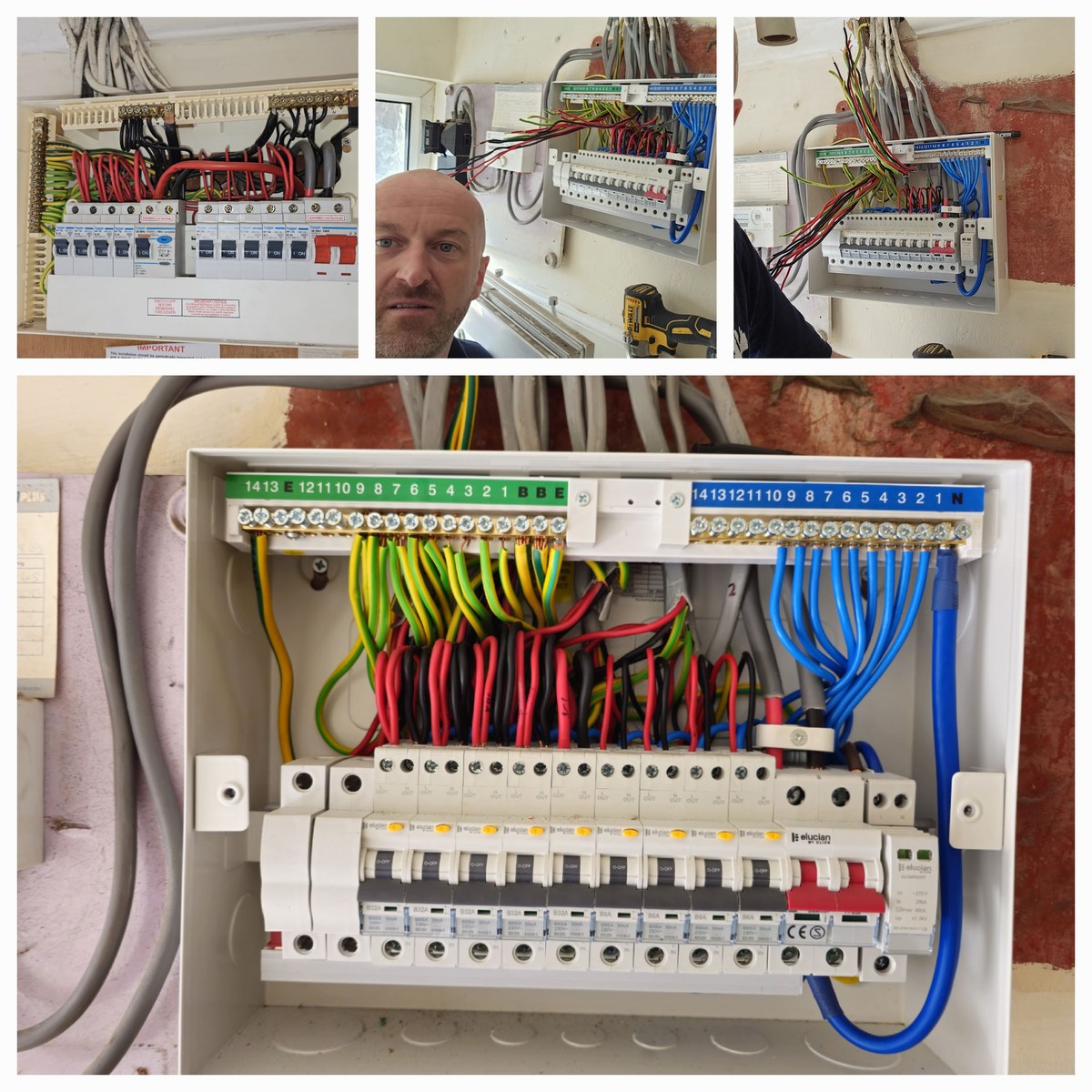
Before any testing, I do a visual inspection of the consumer unit and any accessible wiring. I'm looking at the age and condition of the board, whether circuits are labelled, whether there are signs of heat damage or overloading, whether the earthing and bonding arrangements are correct, and whether any DIY additions have been made without proper certification.
I'll also check accessible parts of the installation, the loft if I can access it, visible cable runs, the meter tails where they enter the board. I'm looking for the warning signs covered in Part 4, rubber cable, improper joints, missing earth sleeving.
The testing — what the numbers mean in plain English
Insulation resistance: I'm checking that the insulation around each cable is still doing its job, keeping electricity where it should be and not letting it leak. Think of it like checking the rubber on a garden hose for cracks.
Earth fault loop impedance: If a fault occurs, say a live wire touches something metal, current needs to flow back to earth fast enough to trip the protective device. It's like checking that the emergency stop on a machine actually works.
RCD trip times: I test each RCD (or RCBO) by deliberately injecting a small fault current and timing how fast it cuts the power. The required trip time is 300 milliseconds or faster, fast enough to protect against electric shock. A slow or non-tripping RCD is a C2 finding.
Continuity of protective conductors: The earth wire needs to run continuously through the installation. A broken earth is one of the most common findings in older properties.
How long it takes
A typical 2–3 bedroom house with 6–9 circuits takes around 2–3 hours. I price EICRs by circuit count rather than bedroom count, because circuit count is what actually determines how long the job takes. You can read more about why in the EICR guide.
The power to individual circuits will go off briefly as I test each one. I'll let you know which circuits are affected and when, so you can plan around fridges, freezers, fish tanks, or anything else that needs to stay on.
The report — what C1, C2, C3 and FI actually mean
At the end, I produce the EICR certificate with a schedule of findings. Each observation is coded:
| Code | What it means | What happens next |
|---|---|---|
| C1 | Danger present, risk of injury | Immediate action required. I won't leave without making it safe. |
| C2 | Potentially dangerous | Urgent remedial work needed. EICR is Unsatisfactory until resolved. |
| C3 | Improvement recommended | Not a failure. EICR can still be Satisfactory with C3s present. |
| FI | Further investigation needed | Something couldn't be fully assessed. Needs investigation before a final verdict. |
The overall result is either Satisfactory (no C1s or C2s) or Unsatisfactory (one or more C1s or C2s present).
What happens if something fails
If I find C1 or C2 issues, I'll explain exactly what they are and what's needed to fix them before I leave. You'll get a written estimate before any remedial work starts. No surprises. Once the work is done, I issue a Minor Works Certificate for each repair. The EICR is then updated to Satisfactory.
C3 findings are recommendations, things that don't meet current regulations but aren't dangerous. The EICR passes as Satisfactory, but I'll explain what any upgrade would involve if you want to address it.
What the EICR doesn't check
It's not a check of your appliances (that's PAT testing). It doesn't assess concealed wiring that genuinely can't be accessed. Those areas get an FI observation. Think of it like an MOT, a snapshot that says the installation meets (or doesn't meet) the required standard on the day.
In Part 6, I'll cover what happens if the EICR leads to a consumer unit upgrade, what the day actually looks like.
Frankie Sewell
NICEIC Approved Contractor • YRLA Recognised Service Provider • Bright Sparks of York
Questions
Do I need to turn the power off for an EICR?
Yes, briefly - each circuit needs to be isolated and tested individually.
What do C1, C2, C3 and FI mean on an EICR?
C1 means danger present and immediate remedial action required. C2 means potentially dangerous and urgent remedial action required. C3 means improvement recommended: not dangerous, and the report is still satisfactory. FI means further investigation, which does make the report unsatisfactory until the investigation is done.
Understanding Your Electrics. Part 5 of 6