The Landlord’s Electrical Playbook, Part 6 of 6
Working With Your Letting Agent on Electrical Compliance
By Frankie · April 2026 · 7 min read
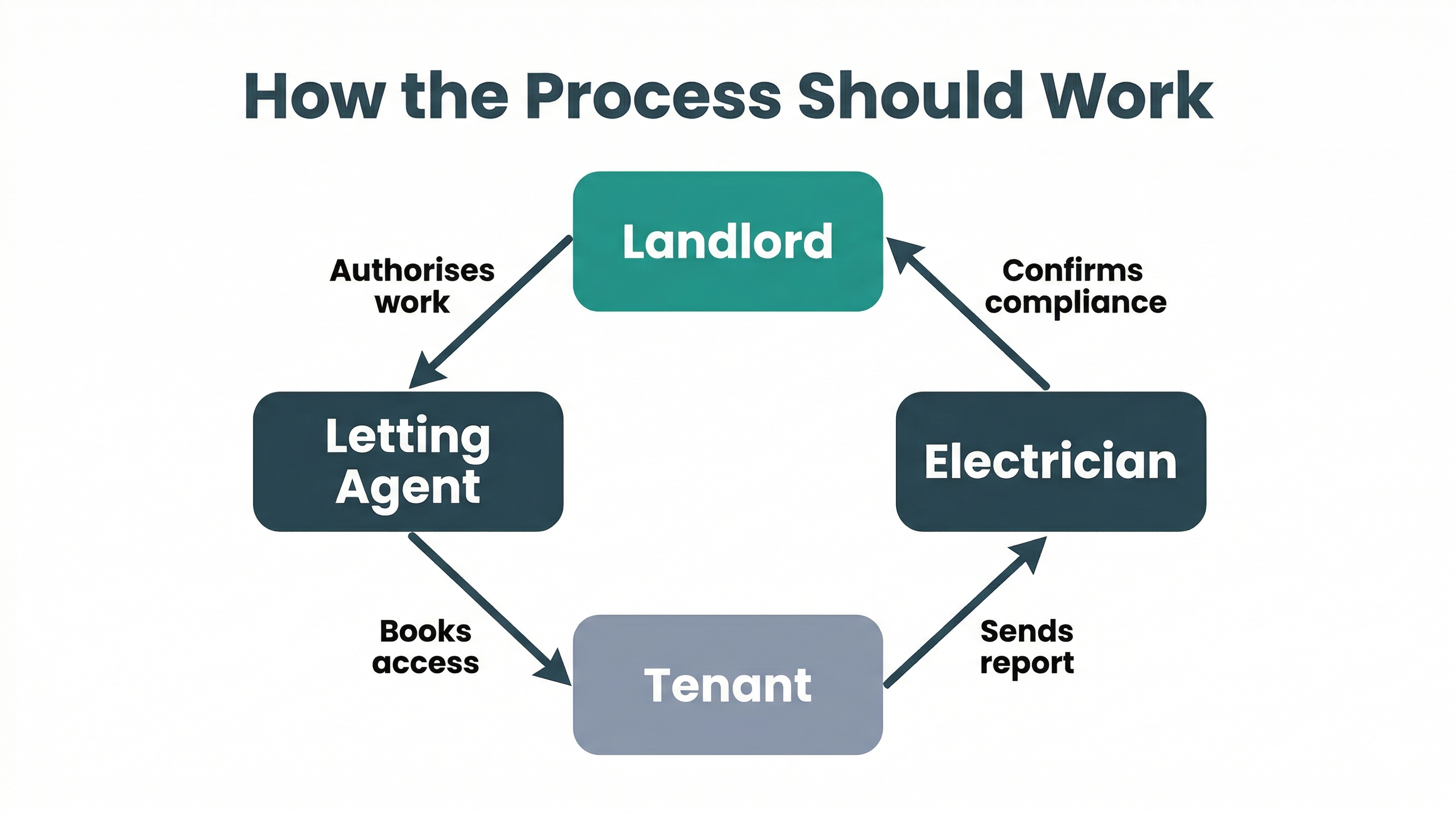
About a third of the EICR work I do in York comes through letting agents rather than landlords directly. The agent rings, gives me the address, tells me where to collect the key, and I get on with it. When it works well, the landlord barely needs to be involved. When it doesn’t, it’s almost always one of three things. Access problems. Unclear expectations about what gets delivered after the job. Nobody sure who decides on remedial work.
This post is for landlords who use a letting agent and want the electrical compliance side to run smoothly, and for agents who want to know what to expect from the electrician at each stage.
How I Work With Letting Agents
The process is straightforward. The agent contacts me to book the EICR or whatever work is needed. I collect the key from the agent’s office, most York agents are within ten minutes of any property I’m visiting, so key collection adds minimal time. If there’s an active tenant, the agent coordinates access with them and gives me a time slot. I carry out the work, lock up, return the key, and send the report.
For void properties, this is smooth. No tenant to coordinate with, the key is at the office, and I can work through the full circuit schedule without interruption. For occupied properties, the agent handles the tenant communication, I don’t contact tenants directly unless the agent specifically asks me to.
What Agents Need From the Electrician
After every job, agents need specific deliverables to keep the landlord’s compliance file up to date. Here is what I send as standard after every EICR or electrical job on a rental property.
What I deliver after every job
The completed EICR report (PDF). Emailed to the agent and the landlord within 48 hours of the inspection. For straightforward installations where I’ve finished the paperwork on site, it often goes out the same day.
A plain-English summary. Not every agent reads EICR reports in detail, and they shouldn’t have to. I include a short summary: satisfactory or unsatisfactory, any observations with their codes, and what needs doing next.
A remedial estimate (if applicable). If the report identifies C1 or C2 observations that need resolving, the estimate for that work is included with the report. The agent doesn’t need to chase me for a separate price, it arrives at the same time as the report.
Part P certificates and EICs. For any notifiable work (consumer unit replacement, new circuit installation), the relevant certificates are issued through NICEIC and sent to the agent, the landlord, and local building control as required.
Common Friction Points
Most problems between electricians, agents, and landlords fall into predictable categories. Knowing what they are makes them avoidable.
Access. The single biggest source of delays. An agent books the EICR, I arrive at the property, and the tenant isn’t home, or didn’t know I was coming. This wastes my time and the agent’s time, and the job needs rebooking. The fix is simple: confirm the appointment with the tenant 24–48 hours beforehand, make sure they know the electrician needs access to every room including bedrooms (for socket testing), and have a backup plan if the tenant cancels.
Tenant schedules. An EICR on a standard rental takes several hours. If the tenant works from home and can’t have the power interrupted, or has young children sleeping during the morning, the testing window shrinks. The agent needs to communicate the testing requirements honestly: I will need to switch circuits off, it will affect the whole property, and it takes longer than most tenants expect.
Urgent remedials. If I find a C1 (danger present) observation during an EICR, I make it safe on the day wherever possible. But the decision to authorise and pay for the full remedial work sits with the landlord, not the agent, unless the management agreement gives the agent authority to approve work up to a certain value. This needs to be clear before the inspection, not debated after I’ve found the problem.
Report turnaround. Some agents need the report for a compliance deadline, a tenancy start date, a licence renewal, a local authority request. If there’s a hard deadline, tell me when you book the job. I will prioritise the paperwork accordingly. If I don’t know there’s a deadline, the report goes out within my standard 48-hour window.

How YRLA Recognition Helps
I’m a recognised service provider with the York Residential Landlords Association (YRLA). In practical terms, that means I already understand the compliance requirements that York landlords and agents deal with. I know what the local licensing conditions require, I know the report formats agents need for their files, and I know the timescales the market works to.
For agents, it’s a shortcut. Instead of explaining what they need from the electrician, they can assume I already know. For landlords, it’s a trust signal. The YRLA endorsement means the association has vetted the service and considers it appropriate for their members’ properties.
When the Landlord Needs to Be Involved
Most routine electrical work on rental properties can be handled entirely between the agent and the electrician. The landlord doesn’t need to be at the property, doesn’t need to arrange the key, and doesn’t need to supervise the work. But there are specific situations where the landlord does need to make a decision.
Remedial work above the agent’s authority. If the EICR identifies work that exceeds the agent’s spending authority under the management agreement, the landlord needs to approve it. I send the estimate to both the agent and the landlord, so the landlord has the information without needing to chase it.
Major upgrades. A consumer unit replacement, a rewire, or a fire detection system upgrade are significant decisions. The agent can facilitate the process, but the landlord needs to understand the scope and cost before giving the go-ahead.
Unsatisfactory reports. If the EICR comes back unsatisfactory, the landlord has a legal obligation to complete remedial work within 28 days (or the timescale specified by the local authority). The agent can coordinate it, but the landlord needs to be aware of the obligation and the deadline.
Making It Work in Practice
The landlord-agent-electrician relationship works best when everyone knows their role. The agent handles scheduling, access, and tenant communication. I handle the inspection, the report, and the remedial estimates. The landlord handles approval of significant expenditure and stays informed through the reports I send. Nobody needs to do anyone else’s job.
If you’re a landlord choosing an electrician for your agent to work with, the questions that matter are: do they deliver reports promptly, do they include remedial estimates with the report, do they work directly with the agent on access, and do they understand the compliance timescales? Everything else is secondary.
For more on the compliance side, read the £40,000 fine and what triggers it. For the practical checklist to use during tenant changeovers, see the electrical changeover checklist.
Frequently Asked Questions
Can the letting agent arrange the EICR directly?
Yes. I work directly with letting agents. The agent arranges access (key collection or tenant coordination), I carry out the inspection, and I send the completed report to the agent and the landlord. The landlord doesn’t need to be involved in the scheduling unless they want to be.
How quickly do you send the EICR report after the inspection?
I send the completed report by email within 48 hours of the inspection. For agents managing compliance deadlines, I can flag urgent issues verbally on the day and follow up with the formal report. If remedial work is needed, the estimate for that work is included with the report.
What does the letting agent need from the electrician?
Agents typically need four things: the completed EICR report (PDF), a clear summary of any observations and their codes, an estimate for any remedial work needed, and Part P certificates for any notifiable work carried out. I provide all four as standard after every job.
What happens if the EICR finds urgent remedial work?
If I find a C1 (danger present) observation, I will make it safe on the day wherever possible and notify the agent immediately. For C2 (potentially dangerous) observations, I provide a remedial estimate with the report. The agent and landlord can then decide how quickly to proceed, but C1 and C2 codes need resolving before the installation can be classified as satisfactory.
Does YRLA recognition make a difference for letting agents?
YRLA (York Residential Landlords Association) recognition means the agent and landlord know I understand the local rental market and its specific requirements. It’s a trust signal, but the practical difference is that I’m already familiar with the compliance standards York agents work to, the report formats they need, and the timescales they operate on.
Frankie Sewell
NICEIC Approved Contractor • YRLA Recognised Service Provider • Bright Sparks of York
Letting agent or landlord needing reliable electrical compliance?
I work with agents across York on EICRs, remedial work, and fire detection. Reports delivered within 48 hours, remedial estimates included.
The Landlord’s Electrical Playbook, Part 6 of 6 · All parts →